Every driving school in Uganda will teach you the basics of night driving: use your headlights, dip for oncoming traffic, don't speed. That's fine — but it's not enough. Not even close.
After training over 2,000 students at LYN Driving School and analysing real-world night driving incidents across Kampala, Entebbe, Jinja, and the northern corridor, we've discovered that the standard advice misses the most dangerous situations entirely. This guide covers what actually matters on Ugandan roads after dark.
The Invisible Killer: Peripheral Vision Collapse
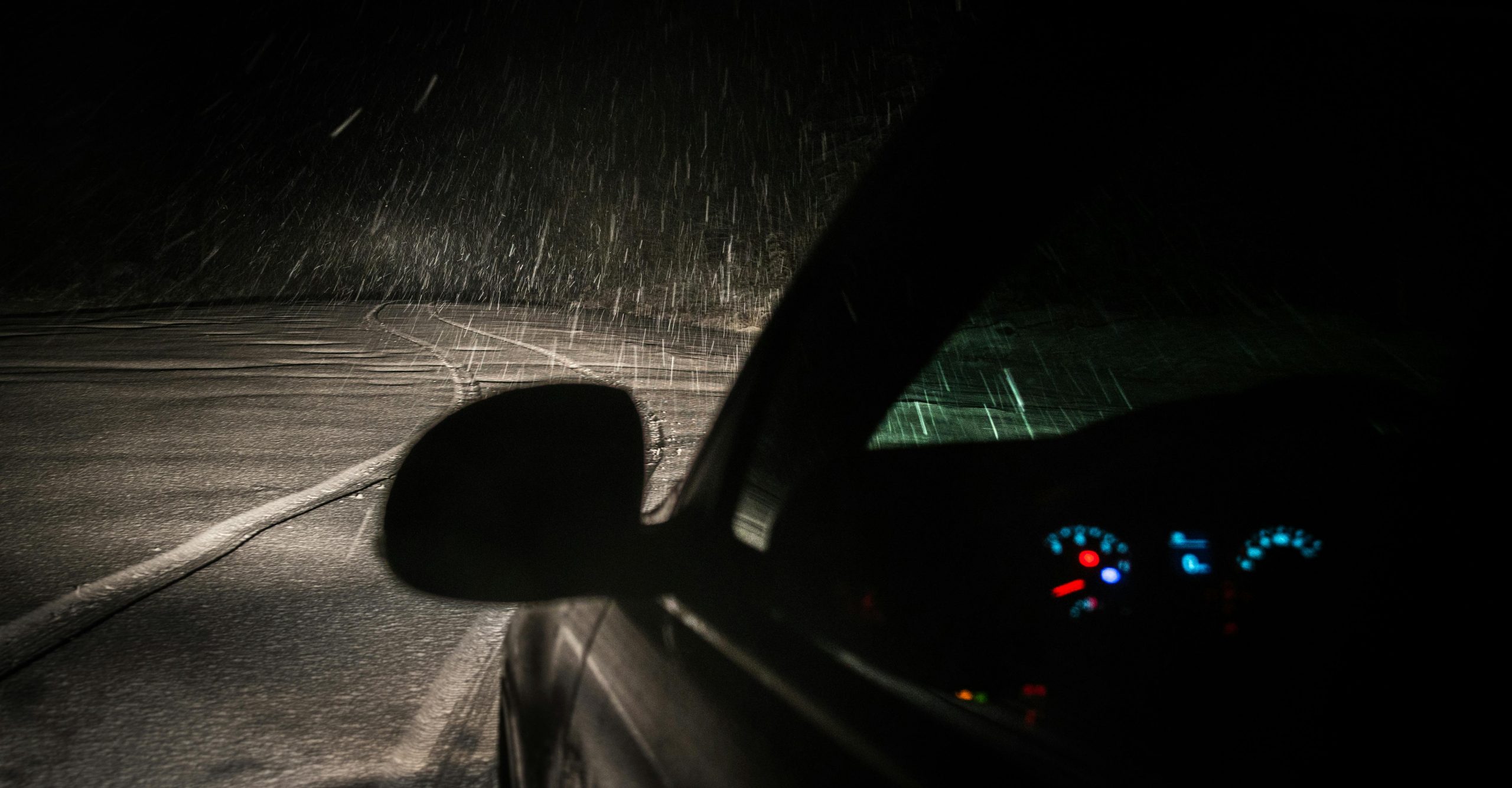
Here's something almost no driving manual mentions: at night, your peripheral vision drops by up to 70%. During the day, you can spot a pedestrian stepping onto the road from the corner of your eye. At night, your effective field of vision narrows to roughly what's directly in your headlight beam.
This means the standard "scan the road ahead" advice is dangerously incomplete. What you actually need to do is systematically sweep your head and eyes — not just glance — across the full width of the road every 3–5 seconds, deliberately checking the road shoulders, ditches, and areas beyond your headlight reach for movement or reflectivity.
"A student once told me they felt safe at night because they could 'see the road clearly.' I asked them to cover one eye. That's roughly the difference between day and night peripheral vision. Their expression changed instantly."
The Kampala-Entebbe Corridor: A Case Study
We mapped the most common night driving hazards along the 37km stretch between Kampala and Entebbe. Here's what a typical 11pm drive actually looks like:
Kampala Exit (0–5km) — Pedestrian Gauntlet
Unlit sidewalks, boda bodas without reflectors, drunk pedestrians crossing without looking. Speed: 40 km/h max. Use high beam between streetlights, dip immediately at each pool of light where pedestrians gather.
Nkumba–Katabi Stretch (8–18km) — The Dark Zone
Virtually no street lighting. Speed bumps are poorly marked — watch for the shadow of oncoming cars rising slightly, which indicates a bump ahead. Cows and goats sleep on the warm road surface. Reduce to 60 km/h.
Airport Approach (28–37km) — False Confidence Zone
Better lighting near the airport creates a false sense of security. Drivers speed up, then hit the unlit section before Entebbe town unexpectedly. Maintain discipline — don't let better lighting trick you into higher speeds.
Myths vs Reality: Night Driving in Uganda
We surveyed 500 LYN students before and after their night driving module. The gap between what they believed and what they experienced was striking:
The Speed-Bump Detection Trick That Saves Lives
Unmarked speed bumps are responsible for more night accidents in Uganda than most people realise. Here's a technique we teach at LYN that you won't find in any UDLS handbook:
The "Three-Signal" Method
Instead of trying to see the bump itself (nearly impossible on dark roads), watch for three secondary signals: (1) the vehicle ahead seems to "bounce" slightly, (2) their brake lights flash briefly without apparent reason, (3) oncoming vehicles' headlights dip and rise as they cross the bump. If you see any two of these, slow down immediately — there's a bump ahead.
What Your Eyes Are Actually Doing at Night
Understanding the physiology of night vision changes how you drive. Your eyes have two types of light receptors: cones (colour, detail — work in bright light) and rods (motion, contrast — work in low light). At night, your cones shut down and rods take over. This has three critical implications:
- You can't see colour well. A red traffic light at 200m may look like a dim white dot. Don't rely on colour — rely on position (top = red, middle = amber, bottom = green).
- You're better at detecting movement than detail. A pedestrian walking across the road is easier to spot than one standing still. This is why scanning is more effective than staring.
- Your eyes take 5–10 minutes to fully adapt to darkness. If you look at a bright phone screen, oncoming high beam, or a lit petrol station, your night vision resets and takes minutes to recover. Never check your phone while driving at night — the cost isn't just distraction, it's temporary blindness.
The Glare Recovery Protocol
When an oncoming vehicle hits you with high beam and doesn't dip, most drivers do the wrong thing: they stare at the lights, get blinded, and drift. Here's the LYN protocol:
Slow by 10 km/h
Gradual, not sudden. No hard braking.
Eyes to left edge
Use the white line or road shoulder as guide.
Close left eye
Preserves night vision in one eye for after the vehicle passes.
Don't retaliate
Two blinded drivers is always worse than one.
Wildlife, Livestock, and the Reflection Trick
On Ugandan highways, animals on the road are a nightly reality. The challenge is that dark-coated animals (cows, dogs) absorb light and are nearly invisible. But there's one reliable tell: eye shine.
Animal eyes contain a reflective layer called the tapetum lucidum that bounces light back like tiny mirrors. When your headlights sweep the roadside, watch for two small bright points at roughly the height of a dog (30cm), goat (60cm), or cow (120cm). Even at 100m, these pinpoints of reflected light are often the only warning you get.
The mistake most drivers make? They see the eye shine, don't recognise it, and keep driving at the same speed. Train yourself: any unexplained pair of bright dots near the road at night = slow down immediately.
The UDLS Night Driving Test: What Examiners Actually Score
Through conversations with UDLS examiners and analysis of test results from 800+ LYN students, we've identified the specific behaviours that separate a pass from a fail during the night driving component:
The 34% Problem
Only 34% of students remember to switch back to high beam after passing oncoming traffic. This single forgotten step costs an average of 3 points — often the difference between a pass and a fail. Examiners tell us it's the most common reason otherwise good candidates fail the night module.
The Fatigue Timeline: When Your Body Betrays You
Fatigue doesn't arrive suddenly — it builds in a predictable pattern. Understanding this timeline lets you act before it becomes dangerous:
30–60 minutes — Green Zone
Fully alert. This is when most people feel overconfident and drive too fast for conditions. The irony: you're most dangerous when you feel safest.
60–90 minutes — Yellow Zone
First yawns. Slight reduction in concentration. You're still functional but your reaction time has already increased by 15–20%. This is when you should take a break.
90+ minutes — Red Zone
Micro-sleeps begin (2–5 second lapses you don't even notice). Lane drifting. Missing exits. At this point, you're statistically as impaired as someone over the legal alcohol limit. Stop driving immediately.
The Pre-Drive Ritual: 90 Seconds That Could Save Your Life
Before every night drive, do this exact sequence — no exceptions:
Walk Around (30s)
Check all 6 lights (2 head, 2 tail, 2 brake). Tap each indicator. Clean headlights with your hand.
Windshield Check (30s)
Clean inside and out. A dirty interior windshield scatters oncoming light into a blinding haze.
Eye Reset (30s)
Close your eyes for 30 seconds in the dark car before starting. This jumpstarts your rod cells for night adaptation.
Test Yourself: Would You Survive These Scenarios?
Cover the answers and think about what you'd do. Be honest — most experienced drivers get at least one wrong.
Scenario 1: You're on the Kampala-Gulu highway at midnight. No street lights, no moon. A cow steps onto the road 40m ahead. Your low beams are on. What do you do?
Correct response: Brake firmly but progressively (don't slam — the road surface may be loose). Do NOT swerve — swerving at night on an unfamiliar road often puts you into a ditch or oncoming lane. Flash your high beam once to warn any vehicles behind you. The cow will likely move if you honk simultaneously with braking. If collision is unavoidable, brake and hold straight — a glancing hit at reduced speed is survivable; a rollover from swerving often isn't.
Scenario 2: Dense fog at 9pm on the Jinja road. You can see about 15m ahead. The vehicle behind you is tailgating with high beam reflecting in your mirrors. What's your move?
Correct response: Low beam only — high beam in fog creates a white wall of reflection. Turn on fog lights if equipped. Adjust your rearview mirror to "night" setting (the little tab underneath) to reduce the tailgater's glare. Reduce speed to 30–40 km/h. Find a safe place to pull over and let the tailgater pass — don't let their impatience dictate your safety. Use your left edge line as a guide, not the centre line.
Scenario 3: You've been driving for 2 hours from Mbarara to Kampala. It's 1am. You feel fine — no yawns, no heavy eyes. Do you need to stop?
Yes — absolutely. Research shows that by the 2-hour mark, even drivers who "feel fine" are experiencing micro-sleeps lasting 2–5 seconds. At 80 km/h, a 3-second micro-sleep means you travel 66 metres with zero awareness. You don't feel tired because fatigue suppresses its own symptoms. The rule: every 90 minutes, stop for 15 minutes minimum. No exceptions.
The Final Checklist — But Better
Not the generic list you've seen before. This is what actually separates survivors from statistics on Ugandan roads at night:
Night driving in Uganda isn't about following a checklist — it's about understanding a completely different visual world. The roads don't change at night. Your eyes do. And until you understand how your own vision works in darkness, you're driving on faith, not skill.
At LYN Driving School, our night driving module covers all of this in practical sessions on real Ugandan roads. Not just the UDLS requirements — the things that actually keep you alive.